
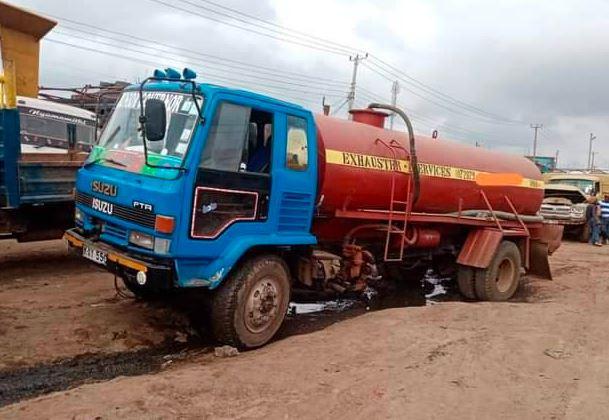
Reliable Exhauster Services from Bestcare Facilities Management
Reliable Exhauster Services in Nairobi, Kiambu, Machakos, Kenya
Exhauster services are an important part of wastewater and sanitation management for properties that depend on septic tanks, cesspits and other on-site wastewater systems. When these systems become full, sludge can accumulate, wastewater may back up, and unpleasant odours or sanitation problems can develop.
Bestcare Facilities Management provides exhauster services in Nairobi and other parts of Kenya, supporting residential, commercial and public facilities with septic tank emptying, sewage removal, tank cleaning and related drainage services. The company’s published service information describes the use of vacuumation and tankering equipment for removing sludge and slurry from septic tanks and cesspits.
What are exhauster services?
Exhauster services involve the removal of wastewater, sludge and accumulated waste from septic tanks, cesspits and related containment systems using specialized vacuum equipment.
A typical exhauster truck uses a vacuum pump to extract liquid and semi-solid waste from a tank. The waste is then transported for appropriate disposal.
For properties without direct connection to a municipal sewer system, scheduled emptying can be an important part of maintaining the wastewater system.
Bestcare describes its exhauster services as covering household, commercial and public amenities and provides services in Nairobi and other parts of Kenya.
Bestcare Facilities Management: Regular septic tank maintenance can help property owners identify developing problems before wastewater overflows into compounds, buildings or surrounding areas.
Exhauster services provided by Bestcare Facilities Management
Bestcare’s published service information identifies several related wastewater and drainage services.
1. Septic tank emptying
Septic tank emptying is one of the main exhauster services. The vacuum equipment removes accumulated sludge and wastewater from the tank.
The service is useful when a septic tank is approaching capacity or when wastewater begins draining slowly because the tank has accumulated excessive solids.
The company advises property owners to consider regular emptying based on factors such as tank size, tank type and the number of occupants.
2. Septic tank pumping
Septic tank pumping involves extracting accumulated liquid and sludge from the tank using an exhauster truck.
Pumping helps restore available capacity within the tank. It can be arranged as routine maintenance or when a tank is approaching an overflow condition.
The appropriate pumping frequency depends on the individual wastewater system rather than a single schedule for every property.
3. Septic tank cleaning
Emptying a septic tank removes its contents, but cleaning can address sludge and deposits remaining on internal surfaces.
Bestcare specifically notes that cleaning after exhausting can help remove hardened biofilm and accumulated material from the bottom and sides of a septic tank.
A cleaning service may therefore be appropriate when significant deposits remain after pumping or when the tank requires more thorough maintenance.
4. Cesspit emptying
Cesspits can also accumulate wastewater and sludge and eventually require emptying.
Bestcare lists cesspit exhausting among its wastewater services. Vacuum equipment allows accumulated material to be removed without manually entering the containment structure.
5. Sewage removal
Sewage removal is another service offered by Bestcare. The company’s service information includes sewage removal and exhauster services for properties experiencing wastewater accumulation.
Prompt sewage removal can be particularly important when wastewater is threatening buildings, compounds, access paths or other areas occupied by people.
6. Sewage disposal services
Removing wastewater from a property is only one part of the process. The collected waste must also be transported and disposed of appropriately.
Bestcare lists sewage disposal among its services. Proper handling helps reduce the risks associated with uncontrolled discharge of wastewater.
7. Grease trap cleaning
Bestcare’s more recent facility-management service information also identifies grease trap cleaning as part of its exhauster services.
Grease traps are particularly important in restaurants, hotels, food-processing facilities and other establishments where wastewater contains fats, oils and grease.
Regular cleaning helps prevent excessive accumulation that could restrict wastewater flow.
8. Sewer unblocking
Bestcare lists both private and public sewer unblocking among its related drainage services.
A blocked sewer can result in slow drainage, wastewater backing up and unpleasant odours. The appropriate solution depends on the location and nature of the blockage.
9. Sewer network inspection
Bestcare also lists sewer network inspection for customers who need to establish or assess connections to public sewer systems.
Inspection can help determine the condition and configuration of a drainage network before connection, repair or other work is undertaken.
10. Sewer network development
The company’s published service list includes sewer network development as another related service.
Such work can be relevant to properties and developments requiring planned wastewater drainage infrastructure.
How Bestcare’s exhauster service works
The exact procedure depends on the property and wastewater system, but a typical service can involve several stages.
1. Service request
The property owner or facility manager contacts Bestcare and provides information about the problem.
Useful information includes:
- Property location
- Type of wastewater system
- Approximate tank size
- Accessibility of the tank
- Signs of overflow
- Previous pumping date
- Urgency of the service
2. Site assessment
The service team assesses access to the tank and the requirements for the job.
Access is particularly important because an exhauster truck needs to position itself close enough to the tank for the suction hose to reach the access point.
3. Tank access
The appropriate access cover is opened carefully so the service team can connect the suction equipment.
Property owners should not attempt to enter a septic tank or cesspit. These spaces can contain hazardous gases and oxygen-deficient atmospheres.
4. Vacuum extraction
The suction hose is connected to the exhauster equipment, and wastewater and sludge are extracted into the truck’s holding tank.
Vacuum extraction minimizes the need for direct handling of sewage.
5. Cleaning where required
Where a full cleaning has been requested, additional work can be performed after the tank has been emptied to remove residual deposits and hardened material.
6. Waste transportation and disposal
The extracted material is transported for appropriate disposal.
7. Final checks
The service team can check the tank and surrounding drainage arrangements for obvious problems before completing the assignment.
Safety reminder: Septic tanks and cesspits should never be entered by untrained personnel. Emptying and cleaning should be handled using appropriate equipment and safe working procedures.
Who can use Bestcare exhauster services?
Bestcare’s exhauster services are designed for several types of clients.
Residential properties
Homeowners and landlords can use septic tank pumping and emptying services for houses, apartments and residential compounds that depend on on-site wastewater systems.
Commercial properties
Offices, shops, restaurants and other businesses can require regular wastewater management, particularly where high numbers of employees or customers use sanitary facilities.
Hotels and hospitality facilities
Hotels, guest houses and serviced accommodation properties can generate substantial volumes of wastewater. Scheduled maintenance can help avoid disruption to guests and operations.
Schools and institutions
Schools and other institutions may have significant sanitation requirements because many people use the facilities daily.
Industrial properties
Industrial facilities can have specialized wastewater-management requirements. The correct treatment depends on the type of wastewater generated and the applicable environmental and safety requirements.
Bestcare’s broader corporate and industrial facility-management services include waste management and environmental compliance alongside other facility services.
Areas served
Bestcare states that its exhauster services cover Nairobi and several surrounding areas, with published references including Karen, Lavington, Ngong Road, Rongai, Langata, Runda, Ridgeways and Ruaka. Its service information also mentions areas such as Ruiru, Kajiado, Kiambu, Kikuyu, Athi River, Juja, Ruaka, Kitengela, Limuru, Machakos, Mlolongo, Ngong, Ongata Rongai, Thika and Kangundo-Tala.
Availability can vary by location, so customers should confirm coverage when booking.
When should you call an exhauster service?
Property owners should consider contacting a professional when they notice:
- Slow drainage
- Frequent toilet backups
- Sewage smells
- Wastewater pooling around drainage areas
- A septic tank approaching capacity
- Overflow from a septic tank
- Grease trap blockage
- Repeated sewer blockages
- Unusually high wastewater levels
Waiting until sewage has overflowed can turn routine maintenance into an urgent sanitation problem.
Benefits of regular exhauster maintenance
Regular maintenance can help property owners:
- Reduce the likelihood of sewage overflow
- Maintain available tank capacity
- Reduce unpleasant odours
- Identify drainage problems earlier
- Maintain sanitary conditions
- Reduce emergency call-outs
- Protect surrounding property
- Support proper wastewater management
The appropriate maintenance frequency depends on the tank’s capacity, wastewater volume, number of occupants and system design.
Exhauster services for facility management
For landlords, property managers and businesses managing multiple buildings, exhauster services can be incorporated into a broader facilities management program.
Bestcare provides integrated hard and soft facility management services, including plumbing, drainage, cleaning, waste management and exhauster services.
This approach can make it easier for a facility manager to coordinate several maintenance requirements through one service provider.
Requesting a quotation
The cost of an exhauster service can vary according to factors such as:
| Cost parameter | Why it matters |
|---|---|
| Tank size | Larger tanks may require more extraction capacity |
| Amount of waste | Greater volumes can increase the work required |
| Distance | Travel distance can affect the quotation |
| Accessibility | Difficult access may require additional planning |
| Cleaning requirement | Tank cleaning may be separate from basic emptying |
| Emergency response | Urgent call-outs may have different pricing |
| Grease trap size | Larger commercial traps require more work |
| Wastewater type | Different waste streams may require specific handling |
Bestcare’s published contact information includes 0709 004 600, 0722 566 999, and info@bestcareservices.co.ke. Its listed physical address is Mpaka Plaza, Westlands, Nairobi.
Why professional exhauster services matter
Septic tanks, cesspits and sewer systems are important components of property sanitation. They require appropriate maintenance rather than waiting until a major blockage or overflow occurs.
Bestcare Facilities Management combines exhauster work with broader plumbing, drainage, waste-management and facility-maintenance services. This can be useful for homeowners, landlords, businesses and institutions that require coordinated property maintenance.
For an exhauster booking, customers should provide the property location, type of wastewater system, approximate tank size and nature of the problem. Bestcare can then advise on the appropriate service and quotation.
Bestcare Facilities Management
Phone: 0709 004 600 / 0722 566 999
Email: info@bestcareservices.co.ke
Location: Mpaka Plaza, Westlands, Nairobi
Coverage: Nairobi and other areas across Kenya, subject to service availability.