
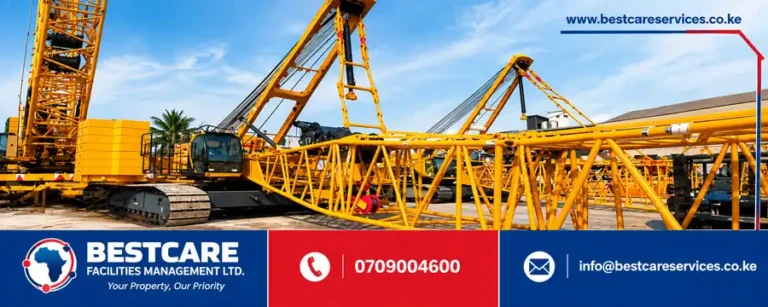
Crane Load Testing and Certification Service
A crane that hasn't been properly load tested is a liability waiting to surface at the worst possible moment, often mid-lift, with workers and property directly in the line of risk. Bestcare Facilities Management Services runs a dedicated crane load testing and certification programme that gives site owners, contractors, and equipment operators documented proof that a crane can safely handle the loads it's rated for, backed by inspection records that satisfy both internal safety policy and regulatory requirements.
What Load Testing Actually Involves
Load testing is not a visual once-over. It's a controlled process where a crane is subjected to loads at or above its rated capacity under monitored conditions, checking how the structure, hoisting mechanism, brakes, and safety devices respond under real stress rather than just at idle. Bestcare's technicians run both static and dynamic tests, static tests hold a load steady to check structural integrity and brake holding capacity, while dynamic tests move the load through the crane's full range of motion to assess how components behave during actual lifting operations.
Every test is carried out with calibrated load cells and testing weights, not estimated loads, which is a detail that matters when an insurer or regulator later reviews the certification paperwork. The technicians also check wire rope condition, hook and sheave wear, limit switches, and the overall structural frame for cracks or deformation that wouldn't necessarily show up during a routine visual inspection.
Why Certification Isn't Optional
Kenyan workplace safety regulations require lifting equipment, including overhead cranes, mobile cranes, gantry cranes, and hoists, to undergo periodic examination and testing by a competent person. This isn't a formality; it's what stands between a site and a serious liability exposure if equipment fails during use. Beyond the legal requirement, most insurance policies covering construction sites, warehouses, and industrial facilities explicitly require current load test certificates before they'll pay out on equipment-related claims.
Bestcare's certification process produces documentation that holds up under scrutiny, whether that's an internal audit, a client's due diligence review before signing a contract, or a formal regulatory inspection. Each certificate details the load applied, the test method used, the equipment's rated capacity, any deficiencies found, and a clear pass or conditional pass status with recommended follow-up action where needed.
Who Needs This Service
The service covers a wide equipment range: tower cranes on active construction sites, overhead travelling cranes in warehouses and factories, mobile cranes used for short-term lifts, gantry cranes in fabrication yards, and smaller hoists used in maintenance bays. New equipment needs an initial load test before it goes into service, and equipment already in use needs periodic re-testing, typically annually, though high-usage or older equipment may need more frequent checks depending on wear patterns and manufacturer guidance.
Facility managers overseeing manufacturing plants, logistics warehouses, and construction sites are the most frequent clients, but the service is equally relevant for property developers bringing new equipment online and for contractors who need current certification before a client will allow their crane onto a site.
What Happens After Testing
If a crane passes, Bestcare issues a certificate valid for the standard inspection period, along with a full inspection report covering every component checked. If issues are found, the report flags exactly what needs attention, whether that's a worn wire rope, a brake that's holding below spec, or a structural concern that needs engineering review before the equipment can be recertified. This gives facility managers a clear action list rather than a vague fail notice, which makes it easier to plan repairs without unnecessary equipment downtime.
Bestcare also keeps a record of past test results for each piece of equipment under their care, which helps track wear trends over time and flag components that are approaching the end of their safe service life before they become an active hazard.
Scheduling and Turnaround
Testing is scheduled around a site's operational calendar as much as possible, since most facilities can't afford to have a crane sitting idle for long. Static and dynamic testing for a standard piece of equipment is usually completed within a single day, with the full certification report following shortly after, giving facility managers a fast path from booking to a valid, audit-ready certificate.